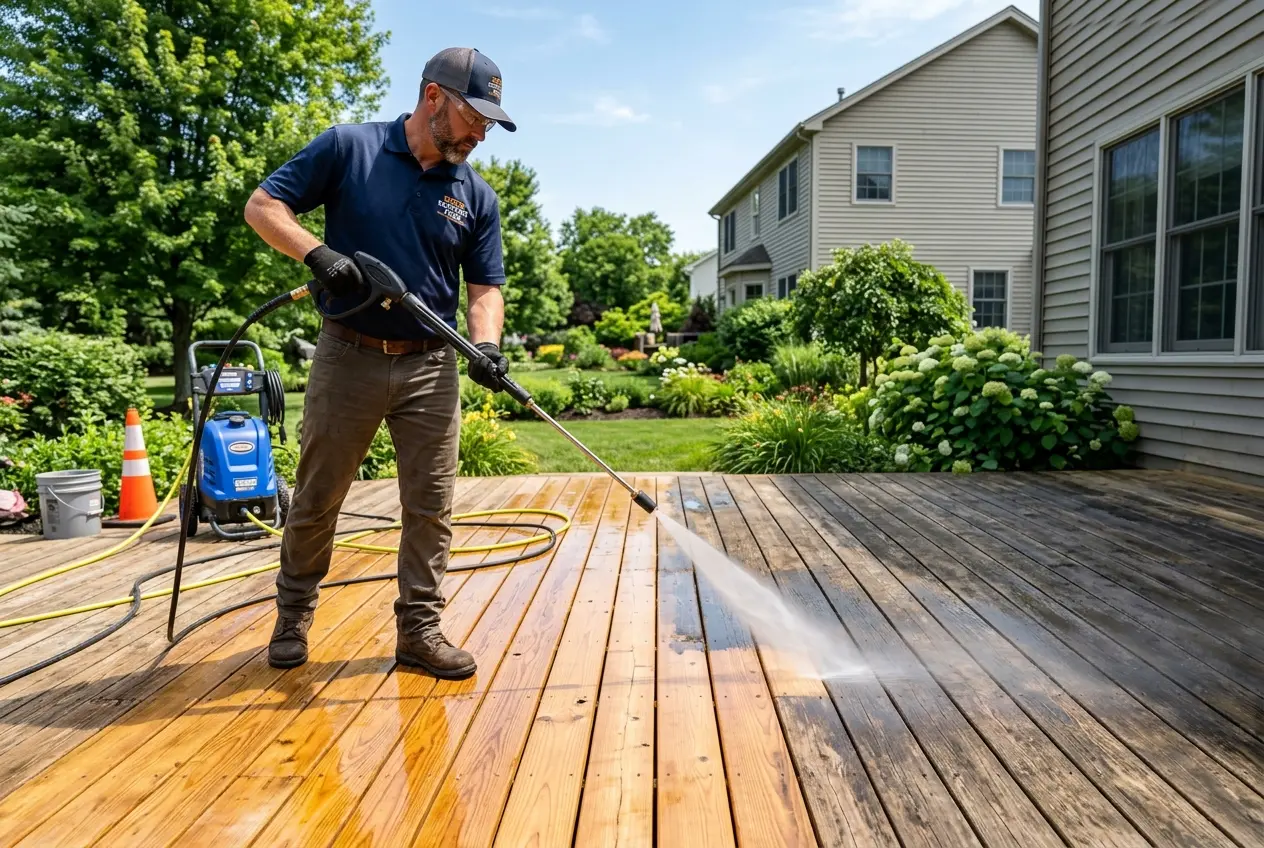
Jacksonville’s docks, pool decks, and backyard pergolas take constant abuse from both sun and humidity. Salt air dries out wood fibers near the beaches, while properties along the St. Johns River battle mold in shaded areas. Our multi-stage process goes beyond surface cleaning to prepare wood for sealing.
We start by removing built-up grime between boards—a common issue with Riverside’s older elevated decks. For composite materials popular in newer Nocatee homes, we use specialized cleaners that won’t leave streaking. The final brightening step erases gray oxidation without sanding, followed by custom recommendations for stains or sealants that stand up to Florida’s rainy season. Your deck will not only look better but will be safer for bare feet and less prone to splintering.
We start by removing built-up grime between boards—a common issue with Riverside’s older elevated decks. For composite materials popular in newer Nocatee homes, we use specialized cleaners that won’t leave streaking. The final brightening step erases gray oxidation without sanding, followed by custom recommendations for stains or sealants that stand up to Florida’s rainy season. Your deck will not only look better but will be safer for bare feet and less prone to splintering.
Our Process
- 01 Step 1: Clear debris from gaps with stiff bristle brushes
- 02 Step 2: Apply wood cleaner with gentle pressure rinsing
- 03 Step 3: Neutralize remaining contaminants with oxalic acid solution
- 04 Step 4: Perform slip-resistance test on wet surfaces
Benefits
- Removes splinter-causing wood fibers raised by humidity cycles
- Restores original color without damaging composite materials
- Reduces slipperiness from algae and mildew
- Prepares surfaces for optimal stain penetration
Frequently Asked Questions
How soon after cleaning can I seal my deck?
We recommend 48-72 hours of dry weather—we’ll check the forecast and advise based on Jacksonville’s typical afternoon showers.